News

News

Jóvenes adventistas comparten esperanza mediante el servicio en toda Interamérica en el Día Mundial de la Juventud

Una adolescente sonríe antes de que le corten la trenza para donación en Tapachula, Chiapas, México, durante las actividades del Día Mundial de la Juventud el 21 de marzo de 2026. La iniciativa, que apoya a pacientes con cáncer que necesitan pelucas, resultó en la donación de 75 mechones de cabello por parte de las jóvenes, algo que aporta dignidad, esperanza y ánimo a quienes reciben tratamiento. [Fotografía: Unión Mexicana de Chiapas] Miles se movilizan en actividades comunitarias, iniciativas sanitarias y actos de servicio en ciudades y comunidades el 21 de marzo 26 de marzo de 2026 | Miami, Florida, Estados Unidos | Libna Stevens, Noticias de la División Interamericana Miles de jóvenes adventistas del séptimo día en todo el territorio de la División Interamericana (IAD) acudieron a sus ciudades y comunidades para servir y compartir esperanza durante el Día Mundial de la Juventud (GYD) de este año, el 21 de marzo de 2026. La iniciativa anual, liderada por el Departamento de Ministerios Juveniles de la Asociación General, anima a los jóvenes a que dejen lo que les resulta cómodo para “Ser el Sermón”. “Hay esperanza para este mundo en crisis”, dice uno de los muchos carteles que llevan cientos de jóvenes durante una marcha de dos kilómetros por Guadalajara, Jalisco, México, en el Día Mundial de la Juventud, el 21 de marzo de 2026. [Fotografía: Daniel Gallardo/DIA] Desde grandes centros urbanos hasta pequeñas comunidades, los jóvenes participaron en actos de servicio que los líderes de la iglesia describieron como “Comunión en Acción”, el lema de este año inspirado en Hechos 4:31, donde los primeros creyentes oraron juntos, se llenaron del Espíritu Santo y compartieron con valentía el mensaje de Dios. El tema destaca el poder de la oración y la acción colectiva en momentos en que los jóvenes se unen para servir a los demás y compartir esperanza en sus comunidades. Como parte del Día Mundial de la Juventud, se distribuyeron por todo el territorio más de seis millones de ejemplares de Palabras de Esperanza, de la cofundadora de la Iglesia Adventista Elena G. White, que se vieron complementados por cientos de iniciativas de servicio comunitario, actividades comunitarias en el área de salud y esfuerzos personales de testificación. Más de 800 adventistas del séptimo día marcharon por 15 manzanas de Guadalajara, Jalisco, México, compartiendo esperanza, promoviendo estilos de vida saludables y distribuyendo libros misioneros durante el Día Mundial de la Juventud. [Fotografía: Daniel Gallardo/DIA] “Hemos vivido un día extraordinario”, dijo Daniel Torreblanca, director de ministerio juvenil de la División Interamericana. “Desde bien temprano por la mañana, los jóvenes salieron a la calle para compartir el amor de Jesús. Han sido las manos y pies de Jesús, y muchas personas se han sentido tocadas por ese amor lleno de esperanza”. Informes de todo el territorio destacaron las brigadas médicas, la distribución de publicaciones y cientos de iniciativas comunitarias destinadas a satisfacer necesidades tanto físicas como espirituales. Nicole Chávez llama a una puerta para entregar un libro misionero en Colinas de Tonalá, Guadalajara, México, durante el Día Mundial de la Juventud. Se distribuyeron más de seis millones de ejemplares de Palabras de Esperanza en toda la División Interamericana el pasado 21 de marzo de 2026. [Fotografía: Daniel Gallardo/DIA] Guadalajara es sede de un gran evento público de testificación Entre los muchos lugares de acción, uno de los encuentros más visibles tuvo lugar en Guadalajara, Jalisco, México, donde más de 800 jóvenes marcharon por 15 manzanas del centro histórico, portando pancartas que promovían una vida saludable y esperanza. La marcha culminó en la Plaza de la Liberación, donde los jóvenes instalaron estaciones en las que destacaron hábitos saludables durante un evento que involucró a espectadores y visitantes. También repartieron libros misioneros, atrayendo así la atención de miembros de la comunidad y autoridades locales. María Luisa Vallejo, funcionaria gubernamental del Ministerio de la Secretaría, habla en la Plaza de la Liberación durante el Día Mundial de la Juventud en Guadalajara, México, felicitando a los jóvenes por su servicio a la comunidad. [Fotografía: Daniel Gallardo/DIA] “Les damos la bienvenida a Guadalajara con los brazos abiertos”, dijo María Luisa Vallejo, funcionaria del Ministerio de la Secretaría que ayudó a la realización del evento. “Felicitamos este noble trabajo de servicio a la comunidad. La sociedad necesita este tipo de esfuerzo: sigan avanzando con fuerza”. “Alabamos a Dios por los millones de libros que hoy se distribuyeron, y aquí en Guadalajara —un lugar emblemático para México— se compartieron miles de ejemplares en una zona donde llegar a las personas con el evangelio puede resultar complicado”, dijo Isaías Espinoza, director de ministerio de publicaciones de la División Interamericana. “Estamos aquí en esta plaza dando gracias a Dios porque muchas personas se han adelantado para recibir el libro. Un joven adventista guía a una pareja a los puestos de una feria de salud en la Plaza de la Liberación durante las actividades del Día Mundial de la Juventud en el corazón de Guadalajara, Jalisco, México. [Fotografía: Daniel Gallardo/DIA] “Pero, sobre todo, estamos agradecidos de ver que los miembros de iglesia están plenamente implicados, emocionados de formar parte de este día tan especial”. Reiterando ese sentimiento, el pastor Héctor Hernández, presidente de la Asociación de Occidente de México con sede en Guadalajara, destacó la importancia más amplia de la iniciativa. “Este es un testimonio poderoso de lo que ocurre cuando los jóvenes salen con fe para servir a sus comunidades y compartir esperanza”, dijo Hernández. “Su compromiso hoy demuestra que la iglesia está viva y activa en el corazón de la ciudad.» El pastor Isaías Espinoza (segundo desde la derecha), director de ministerio de publicaciones de la División Interamericana, habla en la Plaza de la Liberación, junto al pastor Daniel Torreblanca (derecha), director de ministerios juveniles de la División Interamericana, mientras María Luisa Vallejo y el pastor Héctor Hernández (izquierda), presidente de la Asociación de Occidente de México, observan, durante la Jornada Mundial de la Juventud en Guadalajara, México. [Fotografía: Daniel Gallardo/DIA] Los encuentros personales destacan un impacto duradero

El cerebro ansioso

26 de marzo de 2026 | Torben Bergland, MD, para Reminded.org Todo el organismo está involucrado en las respuestas a la ansiedad; pero hay dos partes del cerebro que son especialmente importantes: 1. La parte del cerebro relacionada con las emociones, conocida como sistema límbico y, dentro de esta parte del cerebro que tiene que ver con las emociones, la amígdala, que es la que controla la respuesta emocional del cerebro y el sistema de la memoria. 2. La parte pensante del cerebro, conocida como lóbulo frontal, que anticipa e interpreta situaciones, decide la respuesta preferente y planifica lo que debe hacerse. Los episodios de ansiedad pueden iniciarse tanto en la parte emocional como en la pensante del cerebro; pero, independientemente de dónde comiencen, la otra parte se activará e involucrará eventualmente. Imagina que estás caminando afuera y de pronto te das cuenta de que estás por pisar algo que parece una serpiente. En ese momento se dispara el sistema de alarma de la amígdala. Este sistema reconoce un peligro potencial, activa una respuesta al estrés y prepara al cuerpo para luchar, huir o paralizarse. En la lucha o la huida se liberan adrenalina y cortisol. Se tensan los músculos, el ritmo cardiaco y el de respiración se acelera, se eleva la presión sanguínea y se acarrean oxígeno y glucosa a los músculos, se eleva el sistema de alerta y ocurren otras respuestas más. La amígdala es un salvavidas. Antes de que tengas tiempo para pensar acerca de lo que debes hacer, tu cuerpo se aleja inmediatamente de eso que parece una serpiente. El cerebro emocional toma el control y se hace cargo sin pedir la aprobación del cerebro pensante. El paralizarse es la respuesta de “hacerse el muerto”, en donde se libera acetilcolina y se activan respuestas corporales opuestas. En personas con trastornos de ansiedad, la amígdala puede volverse hipersensible, malinterpretando y respondiendo desproporcionadamente a los detonadores. Esto lleva a falsas alarmas y respuestas de intenso temor que no son ya salvavidas, sino más bien factores perturbadores. La amígdala se ve activada por imágenes, sonidos, olores y otras sensaciones que no son peligros reales. La amígdala activa el cerebro que piensa más despacio, que ayuda a interpretar y evaluar el peligro y determina si se debe continuar o detener la respuesta al estrés. Los episodios de ansiedad que se inician en el cerebro pensante son diferentes. Imagina a una persona sentada en su casa, haciendo planes para salir a caminar. Al imaginar creativamente su caminata, se imagina que puede pisar una serpiente, que la serpiente la va a morder y que se va a morir sola sin nadie que pueda ayudarle. Aun cuando este escenario solo cobra realidad en su pensamiento, tales pensamientos inquietantes pueden actuar como detonadores de la amígdala y causar un episodio de ansiedad con síntomas emocionales y físicos, Al final, la persona decide no salir a su caminata. Estos dos escenarios ilustran la “vía cerebral de las emociones” en los episodios de ansiedad. Estas vías de ansiedad están compuestas por millones de células nerviosas que se comunican por medio de químicos llamados neurotransmisores en billones de conexiones nerviosas llamadas sinapsis. Neurotransmisores tales como: Serotonina Noradrenalina Dopamina GABA (ácido gamma-aminobutírico) y otros, están involucrados en respuestas a la ansiedad. En el siguiente artículo vamos a explorar la forma como podemos entrenar y tratar al cerebro y al cuerpo de manera que podamos manejar la ansiedad y vivir mejor. Traducción – Gloria A. Castrejón The post El cerebro ansioso appeared first on Iglesia Adventista del Séptimo Día – División Interamericana.

Inter-America To Launch Its New Adventist Virtual Library Portal

February 23, 2024 | Miami, Florida, United States | Libna Stevens, Inter-American Division News The Inter-American Division’s (IAD) Office of Education will launch its latest version of the Adventist Virtual Library (AVL) portal during a live streaming program on Mar. 4, 2024. The online event will instruct users how to navigate the new website and access its thousands of resources, as well as highlight expansion plans for the coming months. Created in 2007, AVL is a cybernetic port created to facilitate access to various databases and links in several languages and diverse educational disciplines that complement teaching-learning and investigative process in all the educational Adventist institutions that are part of the IAD. “We are so excited that the virtual library was instituted years ago by the Division and now is a stronger tool for students at our schools and universities in the territory,” says Dr. Faye Patterson, education director of the IAD. The extensive virtual library is also an important accreditation requirement for K-12 educational institutions as well as higher education, not only for the Adventist Educational System in Inter-America, but also government entities in each country, she explains. The launch will be hosted from the campus of Central American Adventist University in Alajuela, Costa Rica, with a group of students, educators and IAD leaders. “It is such a plus to have this virtual library close to our schools which helps cultivate students towards reading more and digging further in their research investigations,” says Dr. Yanet Cima, assistant education director of the IAD, who has been working on the virtual library for nearly three years. Since last year, Cima has been promoting access, fictionality and data resources, for their primary, secondary and university institutions. The new website boasts a rebranding with a new domain, new logo, new features, and vast information in English, Spanish and French. To watch the live event of Inter-America’s Adventist Virtual Library special launch program, on Mar. 4, 2024, at 4:00 p.m. Costa Rica Time, or 5:00 p.m. Miami Time, visit webcast.interamerica.org

Adventist University in Haiti Reopens as Church Members Fast and Pray

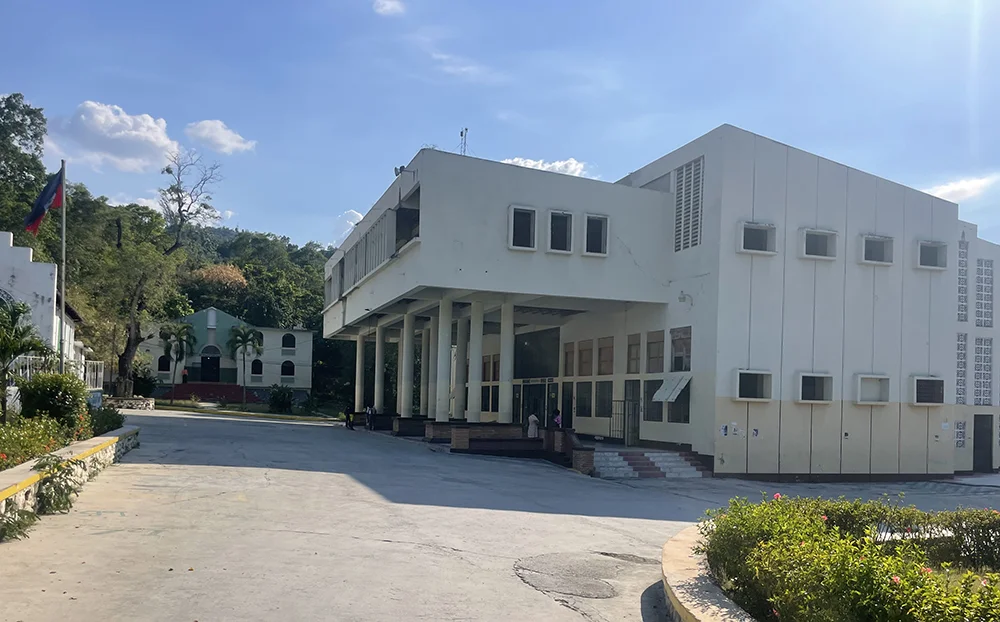
February 27, 2024 | Carrefour, Port-au-Prince, Haiti | Jean Carmy Félixon and Libna Stevens, Inter-American Division News The Adventist University of Haiti (UNAH) in Carrefour, Port-au-Prince, in Haiti, has reopened four weeks after armed men entered the campus on January 23, 2024. “We have opened our doors back again trusting in God for protection because we have to continue educating,” said Dr. Sénèque Edmond, president of UNAH this week. “The threats are still there, for we know anything can happen, but God spared us.” Most  students returned to the campus and dormitories, university officials said. “A few are still unable to return because they are still stuck in some provinces across the country,” said Edmond. The reopening of the university on Feb. 21, 2024, saw administrators, teachers, staff, and students participating in a four-day national fasting and prayer called by the Adventist Church in Haiti. Students, teachers, and staff prayed together several times during the day at UNAH’s auditorium to plead for deliverance from the escalating violence that has affected church members, schools, churches, and institutions across Haiti. In a statement to church members, Pastor Pierre Caporal, president of the Adventist Church in Haiti, said that they are not alone and that the church administration understands their suffering and that the Lord can hear the cries and pain they are going through. “God has a plan for each of us, for His church and our country which is in turmoil,” said Caporal. “Fix your eyes on Him today more than ever and pray to Him with persistence, constancy and a lot of fervor and faith for the deliverance of the country.” Pastor Caporal invited church members and their families to pray in their homes, small groups, churches, schools, and institutions to fast and pray for God’s tender care Local churches throughout Haiti took part in the prayer and fasting on Sabbath, Feb. 24. Inter-American Division President Pastor Elie Henry encouraged leaders and church members during an online program on Feb. 24 to continue pressing on even in the midst of uncertainty and distress and to seek God in prayer every day. “I invite you to continue to meditate God’s Word, reflect in His goodness and pray to Him daily,” said Pastor Henry. “Sometimes we expected God to reveal Himself through great things or great events in our life but God comes in a gentle breath to speak us,” he said. “We must turn our eyes towards God and we will be radiant with joy for He comes into our hearts to soothe our torments and give meaning and direction to our lives.” According to Yonel Bissainthe, communication director at the Bethlehem Adventist Church in Pétion-ville, Haiti, dozens of church members filled the church to pray, confess their sins, and pray together for God’s presence. “Many were so happy to take the time to lay their burdens at the feet of Jesus and left reassured that God would bring about rest from the violence,” said Bissainthe. Marie Carmen Alvarez, a member of the Shékina Adventist Church in Port-au-Prince, followed the program both in person and online throughout the four days of fasting and prayer. “Only God has the last word. We can do nothing but rely on Him through prayer and wait on God’s intervention for we know that the situation will not last forever,” said Alvarez. “I believe that God will work on our behalf.” For months, Adventist churches across Haiti have had to adjust their services to morning or early afternoon to allow members to be home before dark. Church leaders reported recently that 15 churches have closed, and more than 3,500 church members have been displaced.   Addressing so many church members who have been displaced because of the violence in their communities, Pastor Edgar Etienne, dean of the School of Theology in UNAH and pastor of the university church, urged them to rely on God every minute of the day. “We must pray to follow God’s plan for our lives,” said Etienne. “If we must flee our homes, it is God who must show us where to go. Let us not run without God.” There are more than 500,000 Seventh-day Adventists in Haiti. The Adventist Church oversees some 1,330 churches and congregations overseen by the Haitian Union and its one conference and four missions. The union operates a hospital, university, and dozens of primary and secondary schools.

Adventist School in Jamaica Becomes First Educational Institution to Go Solar

February 15, 2024 | St. Catherine, Jamaica, | Kimarley Walker Medley, Dyhann Buddoo-Fletcher and IAD News Staff The Willowdene Group of School (WGS) is Jamaica’s first primarily solar energy-efficient Seventh-day Adventist school. The 11.5M Jamaican dollar [US $73,000] solar energy solution gift was officially handed over to the school from the WGS Alumni Association on Feb. 2, 2024. “We are excited to provide a sustainable energy solution that will contribute to Willowdene’s growth and benefit both current and future students,” said Donmayne Gyles, WGS Alumni Association president. “The partnership between the WGS Alumni Association and the Central Jamaica exemplifies the spirit of collaboration, vision, and innovation.” Gyles also thanked Cecil Foster, managing director of FosRich Group of Companies, and his team for partnering with them in the venture. “Without FosRich, this project would not be the success it has turned out to be.” The WGS Alumni President explained that implementing a solar system will bring numerous benefits to the community. As it embraces sustainability by harnessing clean and renewable energy sources, it will reduce the school’s carbon footprint, and promote environmental consciousness among students and staff, he said. “The solar system will ensure a reliable power supply, allowing for an improved teaching and learning experience,” added Gyles. The Solar PV Installation boasts of a grid-tie system comprising a total generating capacity of 64.36 kilowatts of DC power and a total inverter capacity of 55 kilowatts, which is expected to yield multiple benefits for the school, explained Jodie Ann Graham, sales manager at FosRich. Additionally, “the average consumption for the Willowdene Group of Schools was approximately 6073kWh; with the solar PV system installed, the units will cover 75-85% of the full load,” she said. Graham expressed that the system has a Return on Investment (ROI) of three years and a warranty package on the panels of 12 years; the inverter is for five years, and other equipment is for two to three years. Principal Peter Williams said the cost savings will significantly benefit the WGS’s approximately 700 student population plus staff. “Our electricity bill alone for the past few months has climbed to over 800,000.00 Jamaican dollars monthly [or US $5,098]. Therefore, the cost savings generated by the transition to solar energy will free up resources that can be allocated to other areas, enhancing the overall educational experience for students,” Williams explained. Graham also stated that the solar system is grid-tied and synchronizes with the JPS (Jamaica Public Service) grid. This type of system allows for an automatic supply changeover to JPS, which acts as a backup supply when there is a low solar supply (overcast day) than the school’s energy demand, she explained.  In addition, during the holiday seasons, when school is closed, the excess production from the solar system can be sold to JPS under a standard offer contract net billing system arrangement between the Willowdene Group of Schools and JPS. Adding his praise for the solar energy efficient gift, Chairman of the School Board, Pastor Nevail Barrett, said, “This gesture not only exemplifies WGS Alumni enduring commitment to the school but also empowers us to embrace environmentally responsible practices that align with our educational mission.” “By spearheading this initiative,” said Pastor Everett Brown, president of the Jamaican Union, in his main address, “Willowdene Alumni Association has not only demonstrated its altruism but has also set an inspiring example for others to follow. This gift is a testament to the power of collective action in investing in education, and I pledge my continued commitment and support from the Jamaica Union Conference.” The initiative is part of what the Seventh-day Adventist Church is projecting to do towards being more sustainable, church leaders said. “We are in the discussion phase of ensuring that all our schools trend toward energy cost saving, which has been a concern to us for some time” said Pastor Michael Henry, education director of the Jamaica Union. “We commend the Willowdene Group of Schools for having led the way and very soon, all other institutions will adopt this cost-saving technology,” Inspired by the gift, grade 11 student Jaden Lewis, president of Willowdene High School United Students Association, expressed her deepest thanks on behalf of the student body. “In the face of global challenges, it is reassuring to witness our alumni taking proactive steps to impact our school and the environment positively. The installation of the solar panels provides us with a sustainable energy source and sets a powerful example for us all,” Lewis said. The Seventh-day Adventist Church in Jamaica owns and operates 27 primary and secondary schools, overseeing over 4,500 students annually. Numbered among the schools in the Jamaica Union is the Willowdene Group of Schools, which lies in the jurisdiction of the Central Jamaica Conference of Seventh-day Adventists. They are accredited by the Ministry of Education in Jamaica and the accrediting body of the Seventh-day Adventist Church. The institution stands as a group of schools with three divisions: the early childhood, preparatory school, and high school.